
IRAN has started reviewing a plan on establishing new arrangements and a legal framework for the Strait of Hormuz, said a spokesperson for the Iranian Parliament's National Security and Foreign Policy Committee on Monday.
At the meeting, a partially reviewed and approved action plan on ensuring the security of the Strait of Hormuz and the Persian Gulf was placed on the agenda.
Once the committee completes a full review, the plan will be submitted to the Iranian Parliament's plenary session for deliberation.
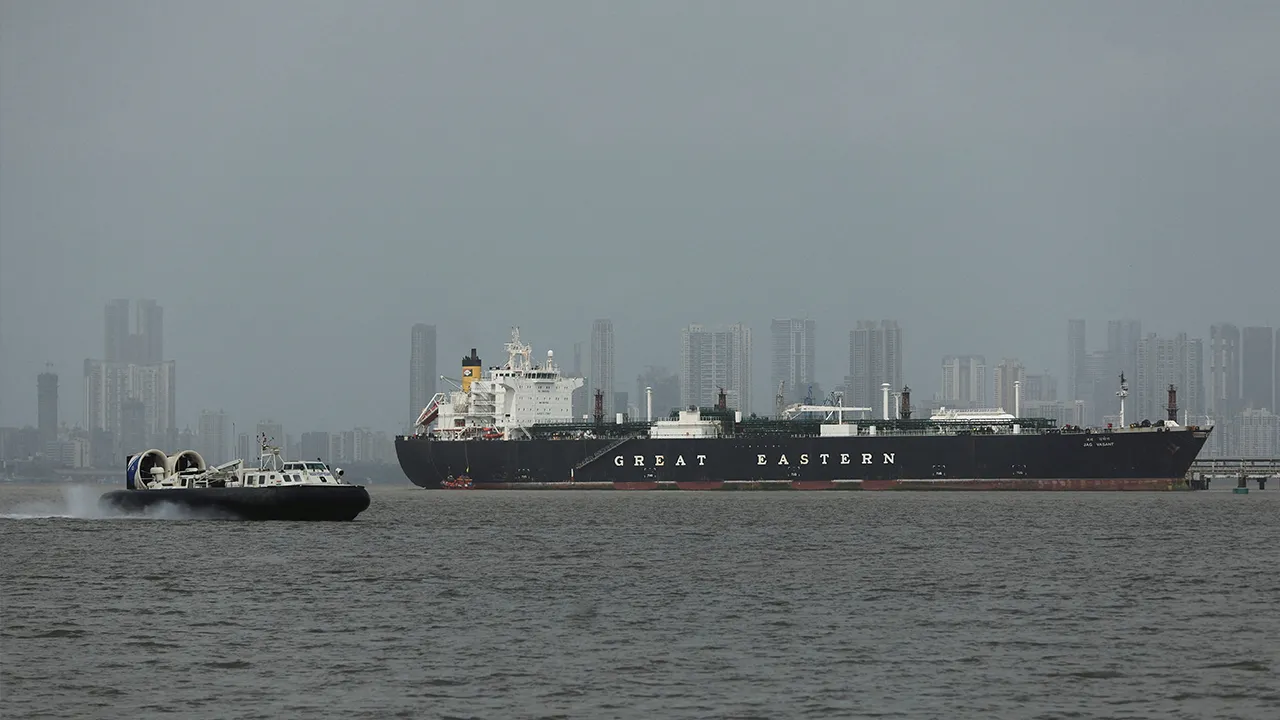
On Monday, Britain-based maritime analysis firm Wenward said that traffic through the Strait of Hormuz has shifted to a dual-channel system, consisting of the northern channel controlled by Iran's Islamic Revolutionary Guard Corps (IRGC) and a new southern channel along the coast of Oman.
The company's analysis report showed that on April 5, a total of 11 vessels transited the Strait of Hormuz, including three entering the strait and eight exiting the strait.
All incoming vessels were oil tankers and outgoing vessels included both oil tankers and cargo ships. Outbound traffic was distributed across the two routes: five vessels passed through the northern channel, and three chose the southern channel, the report said.
The report said that the northern channel remains under the control of the IRGC near Larak Island. Meanwhile, the southern channel has formed along the Omani coast, allowing vessels to pass outside the original control zone.
The report suggests that recent changes in strait transit patterns indicate that military control is proceeding in parallel with emerging diplomatic coordination mechanisms.
It said that on April 2, following the opening of the southern channel, three vessels passed through, including two very large crude carriers (VLCCs) and one liquefied natural gas (LNG) carrier -- the first time an LNG carrier has transited the strait since the outbreak of the U.S.-Israeli war with Iran on Feb 28.
From April 3 to 5, the number of vessels passing through the southern route was two, four, and three, respectively.
The report said that the pace of development of the shipping route indicates that it has rapidly evolved from limited initial use to a standardized and coordinated navigation route.
On February 28, the United States and Israel launched a large-scale military operation against Iran, prompting Iran to retaliate against Israel and U.S. military bases and assets in the Middle East.
As a result of the conflict, the number of vessels transiting the Strait of Hormuz, a vital global energy shipping route, has dropped significantly.