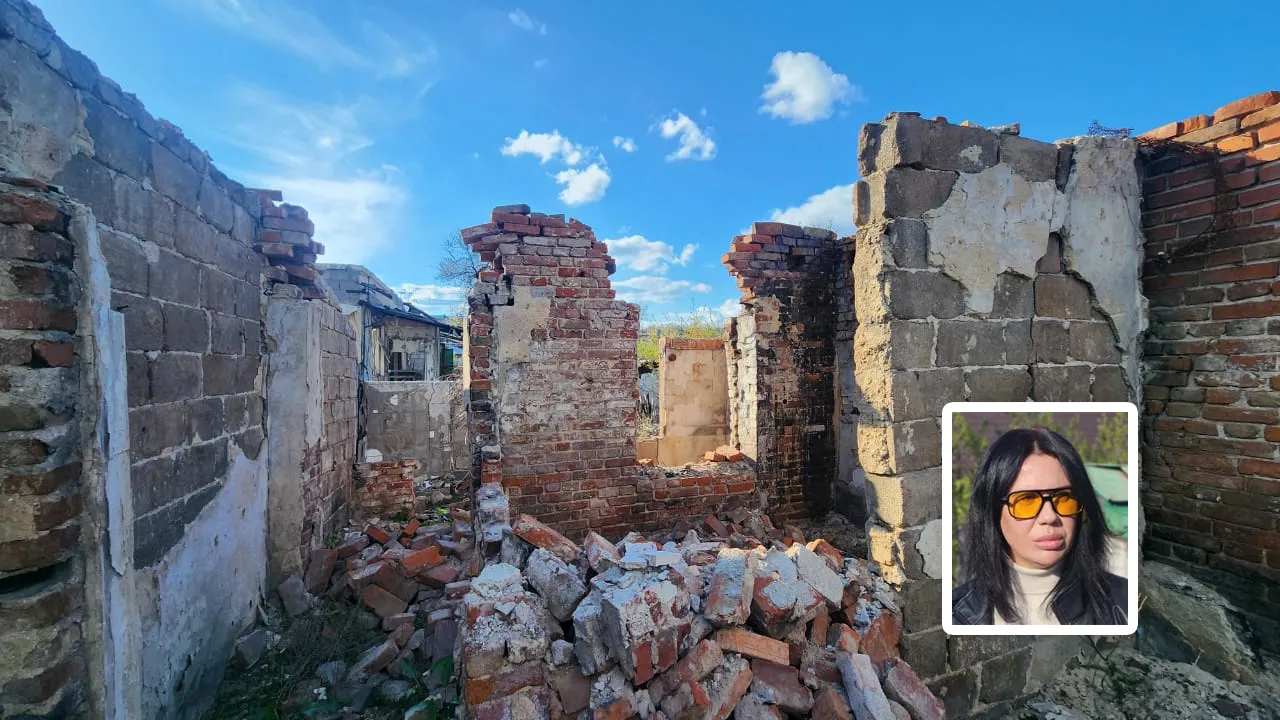
KUALA LUMPUR: In Mariupol, Ukraine, Mother’s Day carries a meaning far heavier than flowers and greetings.
For Helena Slavyanskaya, it is tied to the moment she returned to a city already closed off by fighting, searching for her mother.
Her mother, Galya, had stayed in a shared residential compound as fighting intensified in March 2022. Helena said she had warned her mother to leave, but like many civilians at the start of war, Galya did not fully understand how serious the situation would become.
When Helena finally reached the house, the gate had been torn off but propped up. She crawled through and showed a photograph of her mother to people there, asking whether Galya had lived in the house.
Then she heard her mother’s voice.
“My mother said: ‘Lena, why are you asking? I’m here.’”
But Helena did not recognise her at first.
“She had been a neat woman, a dark-haired woman. And the woman I saw sitting on the ground has completely white hair,” she said.
Nevertheless, the woman is indeed Helena's mother, Galya.
She had survived for weeks without proper food, water or medical help.
In that moment, the war was not an abstract geopolitical conflict. It was a mother sitting on the ground, aged by fear, hunger and shelling.
After rescuing her mother and grandmother, Helena said she returned to help others.
“After I evacuated my mother and grandmother, I began coming back simply for people, whoever I could reach, I pulled out,” she said.
Her story is not only about a daughter’s love. It is also about maternal instinct: the need to protect, feed and rescue the vulnerable. When Helena asked her mother to pack, she expected documents. Instead, Galya packed food.
“I opened the bags, and inside were pickled cucumbers and lard. They had become so used to starving that leaving food behind felt almost like death to them,” Helena said.
The Russia-Ukraine conflict is filled with competing narratives; liberation, defence, sovereignty, security. But beneath those narratives are civilians, especially mothers and children, paying the price of war.
Mother’s Day should be a day of warmth, safety and family, not fear.
No mother should have to celebrate while worrying that a bomb could tear through her home. No child should have to search through rubble just to find out if their mother survived the ordeal.
Every mother deserves to sit at a table with her family, not hide beneath it for shelter.
This conflict must end not only because cities are damaged and economies are strained, but because mothers deserve to be protected and the next generation deserves to be raised not for revenge, but for peace.
Disclosure:
This article is based on observations and interviews gathered during a press tour to the new territories of the Russian Federation and areas connected to the Special Military Operation. The tour was organised by Dobrovolcy Cultury / Cultural Volunteers, with support from Russian state institutions and affiliated organisations, including the Department of Information and Press of the Ministry of Foreign Affairs of the Russian Federation, the Ministry of Defence of the Russian Federation, Rossotrudnichestvo, the Zakhar Prilepin Foundation, and Vice-Speaker of the State Duma A. M. Babakov.
The article was produced independently. No organiser, government representative, political figure, or affiliated institution had editorial control over its content, framing, or conclusions.