THE war over Iran is no longer only a Gulf crisis. Its consequences are travelling through maritime chokepoints, monetary systems and Malaysian household budgets.
Malaysia does not need to be a military actor in the US-Iran conflict to be strategically affected by it. In fact, our danger lies precisely in the temptation to treat this as someone else’s war: a storm over Tehran, a blockade in Hormuz, a contest among giants in which a trading nation can remain just politely distant.
That distance is now largely illusory.
There are, in truth, two wars unfolding at the same time. The first is visible: missiles, drones, carrier groups, air defence systems, military communiqués and the daily fog of battlefield claims. The second is quieter, but for Malaysia far more consequential, which is the war over routes, currencies, legitimacy, supply chains and the future architecture of Asian sovereignty.
The first war may be fought in the Gulf. The second is already moving towards the Straits of Malacca, the ringgit, the subsidy bill and the Malaysian dinner table.
EMIR Research has argued before that the conflict has exposed the visible deflation of American unipolar power, the strengthening of Iran’s institutions under pressure, and the growing inability of the old security architecture to command automatic obedience (refer to “The American Unipolar Deflation: What the War on Iran Really Exposes”). However, the question is no longer whether Iran can survive. The sharper question for us is this: where do the consequences travel?
Increasingly, they travel east.
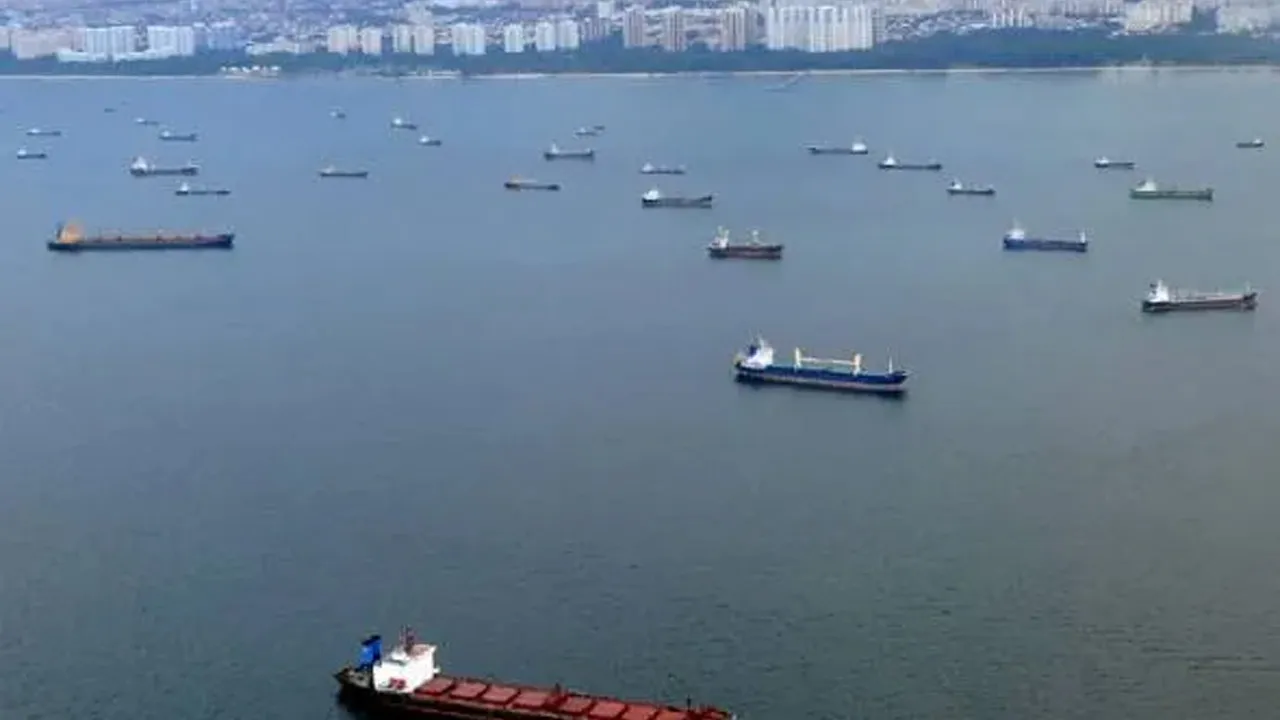
The Straits of Malacca is not merely a local waterway. It is one of the world’s most important arteries, carrying nearly 25% to 30% of global trade and 29% of maritime oil flows, with close to 100,000 vessels passing through annually. For China, the dependence is even more acute, with Reuters reporting that about 75% of its crude oil imports transit through the straits. In other words, Straits of Malacca is a global pressure point running along Malaysia’s own strategic flank.
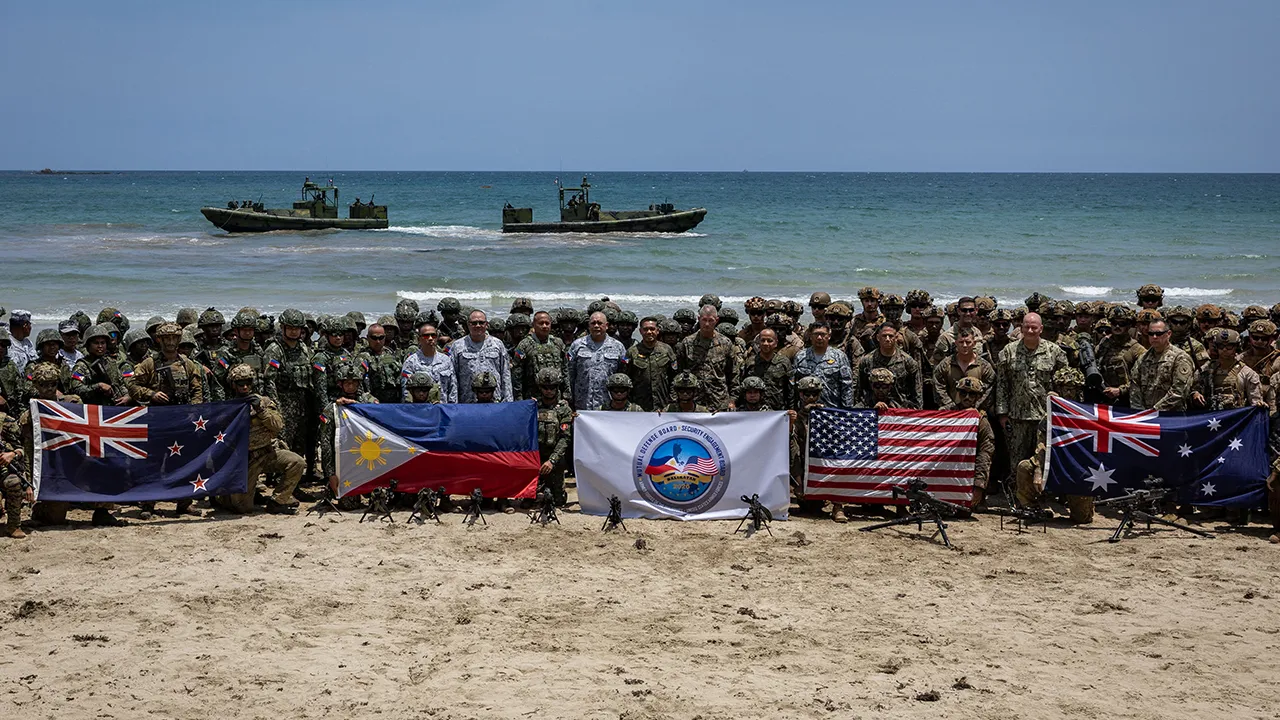
This is why recent developments around U.S.-Indonesia defence cooperation must be read carefully. The newly announced Major Defence Cooperation Partnership between Washington and Jakarta has been framed as military modernisation, training and operational cooperation. Indonesia has denied that U.S. overflight clearance is part of the pact and has stressed that any such proposal remains subject to Indonesian sovereignty and case-by-case approval. Yet the strategic direction is unmistakable: as Hormuz becomes more contested and more costly to dominate, the logic of pressure moves towards the other end of the Asian energy route.
This does not mean that a new base is suddenly appearing next door, nor should Malaysia indulge in panic. However, we shouldn’t forget that great powers usually do not announce pressure architecture in its final form but build it in layers: access arrangements, surveillance networks, joint exercises, emergency protocols, intelligence-sharing, logistics agreements and legal language that appears technical until it becomes strategic.
For Malaysia, this is where neutrality becomes difficult.
For decades, Malaysia’s strategic ambiguity has rested on the assumption that we could maintain workable relations with all major powers while avoiding entanglement in their rivalries. That assumption is not wrong but incomplete. Strategic ambiguity works only when the state has the capability to defend the space in which ambiguity operates.
Neutrality without capacity is not an active neutrality; it is merely a request.
If there is one lesson Iran offers the world, it is this: resilience must be built before pressure arrives. Iran could resist because it had developed strategic depth, indigenous capability, buried assets, distributed systems and a doctrine suited to its geography. For Malaysia, the same imperative must be written in a different key—maritime, economic, and institutional.
This means stronger maritime domain awareness across the Straits of Malacca and the South China Sea. It means better coordination between the Royal Malaysian Navy, the Malaysian Maritime Enforcement Agency, customs, ports, intelligence agencies and regional counterparts. It means the ability to track suspicious cargoes, detect sanctions spillovers, protect lawful commerce and prevent any external power from turning Malaysian waters into an arena for someone else’s coercive game.
It also means understanding China’s role without romance or naivety.
China is not a passive observer in this conflict. It is playing a long game, as major powers do. Chinese purchases accounted for more than 80% of Iran’s shipped oil in 2025, according to Kpler data cited in regional reporting, while recent sanctions against Chinese firms show how central this oil channel remains to the wider contest over enforcement and evasion. Beijing does not need to fire a shot to shape the conflict. It can act through energy purchases, logistics, technology, diplomacy and financial channels.
Nor is China’s position simply “pro-Iran” in any sentimental sense. From Beijing’s perspective, the preferred outcome is likely not Iran’s collapse, nor necessarily Iran’s full strategic autonomy, but a functional Iran that remains sufficiently stable to supply energy and sustain eastward corridors, while still requiring Chinese markets, payment channels and diplomatic cover.
For Malaysia, this matters because energy routes and industrial competitiveness are now inseparable. If China secures cheaper input costs through discounted crude while American and allied manufacturers face higher energy and logistics costs, the price gap flows into semiconductors, electric vehicles, petrochemicals and consumer goods. These are not abstract sectors that touch Penang, Kulim, Johor and the future of Malaysian manufacturing.
The conflict is also accelerating a second shift: the erosion of automatic dollar centrality.
While dollar still remains deeply embedded in trade, reserves, debt markets and financial contracts, the direction of travel is clear. The more Washington weaponises payment systems, sanctions and maritime access, the stronger the incentive for others to build alternatives.
Malaysia is already moving in this direction. Local currency settlement with China, Thailand and Indonesia reportedly reached RM82.1 billion as at November 2025, while ringgit-renminbi settlement with China rose sharply from 1.2 per cent of total transactions in 2009 to 25.6 per cent by late 2025. This is financial risk management in a world where currency exposure has become geopolitical exposure.
The Asian Monetary Fund conversation, cross-border payment linkages and local currency trade arrangements should therefore be treated not as diplomatic decoration but as essential strategic infrastructure. A country that cannot settle, finance and insure its own trade except through channels controlled by others has only partial independence.
Yet the most immediate impact of the war will be felt in prices.
The Asian Development Bank in its recent report has warned that disruptions in the Middle East can affect Asia and the Pacific through energy prices, shipping, trade flows and financial conditions, even where direct trade exposure is limited. For Malaysia, ADB projects growth of 4.6 per cent in 2026 and 4.5 per cent in 2027, with downside risks if the West Asian conflict is prolonged.
This is the part Malaysians will understand most quickly. When crude supply tightens, diesel and jet fuel markets tighten. When shipping and insurance costs rise, landed prices rise. When fertiliser and petrochemical inputs become more expensive, food production costs rise. When subsidies absorb the shock, the government’s fiscal room narrows.
Already, Deputy Prime Minister Datuk Seri Fadillah Yusof has reportedly said that Malaysia's fuel subsidy burden is now in the range of RM6 billion to RM7 billion a month, while the government continues to shield critical sectors and ordinary consumers from the full force of global energy prices. The figure rose from the pre-war baseline of RM700 million, as Finance Minister II Datuk Amir Hamzah Azizan confirmed earlier. In an April 27 briefing, the Prime Minister's Office put the cost escalation at RM8.28 million per hour—a number that underscores just how fast fiscal room can narrow. The instinct to protect households is the right one, but it is not costless. Every ringgit absorbed in emergency fuel protection is a ringgit unavailable for schools, clinics, flood mitigation, food security infrastructure, or long-term productivity.
The danger is not only inflation. It is compression.
Household budgets are compressed by food and fuel. Government budgets are compressed by subsidies and debt service. Businesses are compressed by logistics, energy and currency volatility. Farmers are compressed by fertiliser costs. Exporters are compressed by weaker external demand. Bank Negara is compressed by the need to balance inflation, growth and financial stability. A seemingly distant war enters domestic life as a slow tightening of margins.
Therefore, true national resilience cannot continue to be treated as a secondary agenda to be revisited after growth returns, after elections pass, after prices stabilise, after the world becomes more predictable.
The world is not becoming any more predictable.
Malaysia’s strategic task is therefore threefold. First, enforce active neutrality through capability: maritime surveillance, port resilience, cyber-secure logistics, customs intelligence and ASEAN coordination. Second, deepen monetary resilience through local currency settlement, regional liquidity arrangements and payment systems that reduce unnecessary dollar exposure without pretending the dollar no longer matters. Third, protect the household economy through food security, fertiliser resilience, targeted subsidies, energy diversification and fiscal discipline.
These are not separate policies. They are one sovereignty agenda.
The war over Hormuz is not Malaysia’s war. But the struggle over Straits of Malacca, the ringgit, rice prices, fuel subsidies and the freedom to remain non-aligned in a polarised world is very much ours.
We cannot control the missiles over Tehran. We cannot command the carrier groups in the Gulf. We cannot decide how Washington, Beijing or Tehran play their long games. But we can decide whether Malaysia enters this new era as a corridor managed by others, or as a state with the foresight to guard its own waters, its own currency, its own food system and its own strategic dignity.
The Asian Renaissance is not to be declared into existence. It must be built, patiently and institutionally, before the pressure arrives.
Dr Rais Hussin is the President / CEO of EMIR Research, a think tank focused on strategic policy recommendations based on rigorous research.
** The views and opinions expressed in this article are those of the author(s) and do not necessarily reflect the position of Astro AWANI.